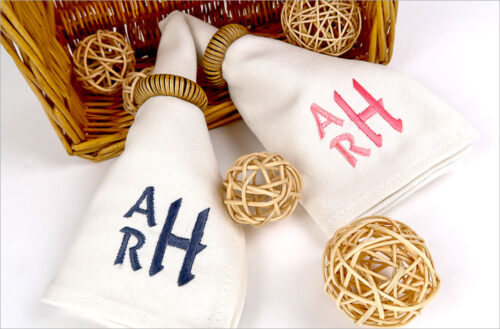
Applying initials to something to identify it as undeniably yours dates back as far as the signet rings of the ancient Romans. Today, machine monogramming makes it easy. Janome expert, Anne Hein reviews a variety of options.
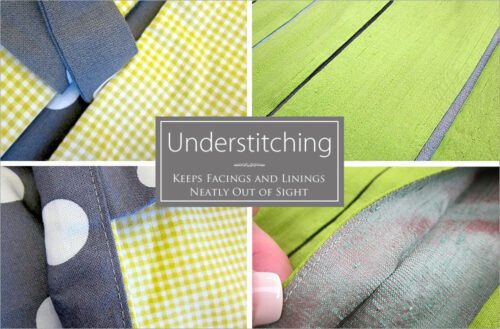
When you want to keep a seamed edge sharp and clean, you understitch the inside piece to the seam allowance so it won’t roll to the outside along the edge seam and look all messy and unprofessional. Learn the steps.
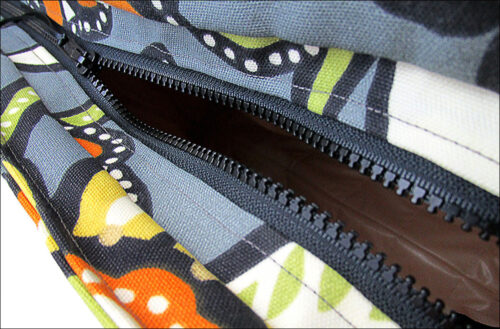
When you want a professional look for your best bag or tote plus the security of a full closure, you can’t go wrong with the recessed inset zipper. Follow our step-by-step tutorial to see how easy it can be.
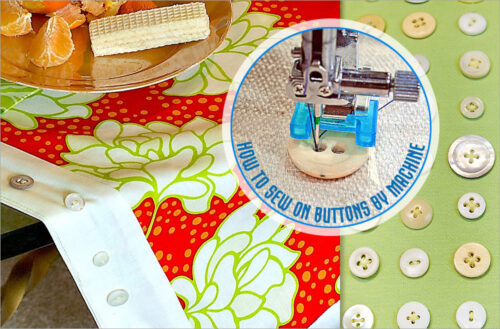
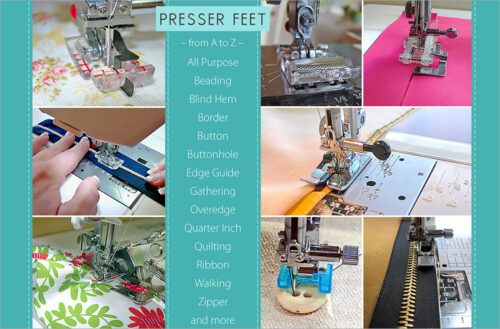
Don’t know about you, but we find sewing buttons by hand a bit tedious, time-consuming, and it can be hard to get them all to look uniform. Solution: using a Button Sewing foot on your machine. Securely attached and perfectly aligned.
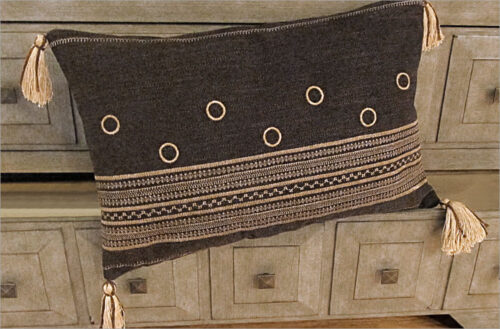
Truly the Art of Thread; this pillow combines dense decorative stitching with machine embroidery accents and cool corner tassels. A décor or upholstery weight fabric gives the proper stability – a dark, solid makes the stitching pop.
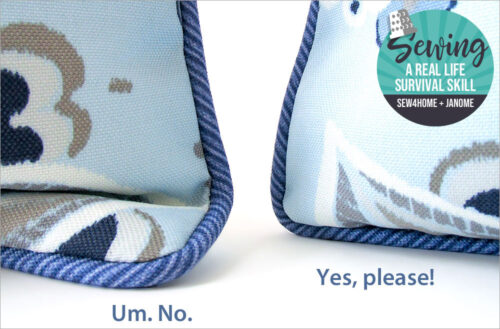
It might seem like a geometric rule-breaker, but one way to keep a square pillow square is tapering the corners rather than sticking with a classic 90˚ angle. Use this quick pro tip to learn how a slight curve can create a better square.
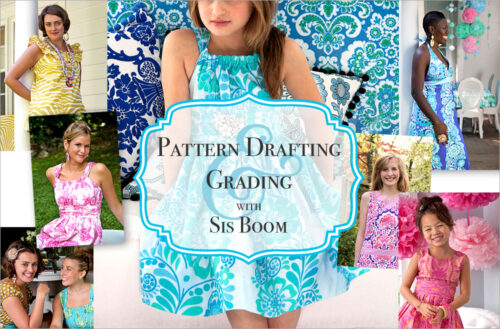
Garment sewing is not necessarily one of our focuses here at S4H, so we turned to expert, Carla Crim for some pattern-making secrets. We found her techniques fascinating, and it certainly inspired us to give it a try.
Learn to pipe like a pro. From types of cording to determining length and yardage to making the bias strips to finishing the ends. You can certainly buy packaged piping, but making your own means you pick the perfect size and fabric.